


Dodge Durango Maintenance: Normal vs Severe
This content was aggregated from local dealer data and insights provided by the USA Today Network Automotive Insights team using Google Gemini and the Vehicles for Sale Near Detroit – Free Press Edition marketplace writing team.
2027 Dodge Durango Maintenance: Normal vs. Severe-Service Schedules in Michigan
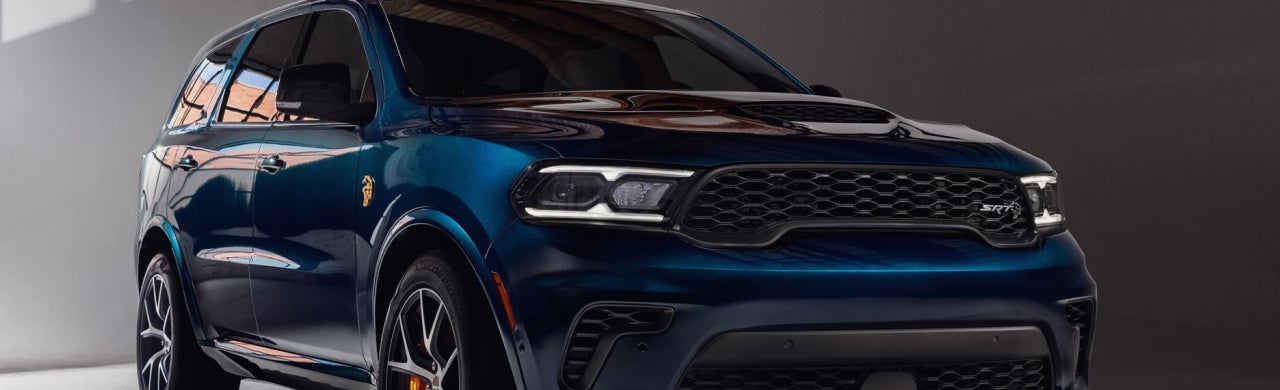
Frequent towing, short trips, extreme temperatures, and extended idling can significantly influence when your Dodge Durango requires maintenance. Specifically, these conditions may affect oil change timing and the need for additional drivetrain services. For your new Dodge Durango, especially the 2027 Dodge Durango, understanding the difference between normal and severe-service schedules is key, as Dodge uses engine-specific maintenance plans rather than a one-size-fits-all approach.What Does Dodge Consider Severe-Service Driving for the Durango?
Dodge defines severe-service driving conditions as those that place extra demands on your vehicle. This includes frequent short trips, especially when the engine does not fully warm up, and regular trailer towing. Prolonged idling or low-speed operation, such as stop-and-go traffic common in Fort Gratiot, MI, also counts as severe use. Driving in extremely hot or cold temperatures, or through dusty or off-road environments, can also increase wear and tear. It is important to remember that these conditions affect specific maintenance tasks and do not automatically shorten every scheduled service interval for your Dodge Durango. Not every driver in Michigan will qualify as a severe-service vehicle owner.How Often Does the 2027 Dodge Durango Need an Oil Change?
The 2027 Dodge Durango features an automatic oil change indicator system that monitors your vehicle's operating conditions to determine the optimal service time. Factors like frequent short trips, regular towing, and exposure to extremely hot or cold temperatures can cause this notification to appear earlier than expected.Dodge provides reference maximum intervals for oil changes, whichever limit occurs first:
- 3.6L Pentastar V6: 10,000 miles, 12 months, or 350 engine operating hours.
- 5.7L HEMI V8: 10,000 miles, 12 months, or 350 engine operating hours.
- 6.4L HEMI V8: 6,000 miles or 6 months.
- Supercharged 6.2L HEMI V8: 6,000 miles or 6 months.
How Do Normal and Severe-Service Maintenance Requirements Differ?
Understanding the distinction between normal and demanding operating conditions helps tailor your 2027 Dodge Durango maintenance schedule.| Driving Condition | Maintenance Implication |
|---|---|
| Regular highway commuting | Follow the applicable engine-specific schedule |
| Frequent short trips | Oil change notification may appear earlier |
| Frequent trailer towing | Earlier oil service and additional axle fluid maintenance may apply |
| Prolonged idling or low-speed operation | Engine operating hours become particularly relevant |
| Extremely cold temperatures | Oil service timing may change |
| Dusty or off-road operation | Additional engine air filter inspections may be necessary |
Which Additional Services Does Frequent Trailer Towing Require?
If you frequently use your Dodge Durango for trailer towing, off-road driving, or in police, taxi, or fleet operations, specific drivetrain components require more attention. Dodge's guidance specifies changing applicable front and rear axle fluids at scheduled inspection intervals under these demanding conditions. Differential fluids are vital for lubricating the gears and bearings within your drivetrain, especially when operating under the heavy loads associated with towing. This service is distinct from transfer case maintenance, which applies to all-wheel-drive configurations when equipped, and automatic transmission fluid service. It is crucial to address only the fluids relevant to your vehicle's specific setup, such as front axle and transfer case maintenance only for configurations equipped with those components.How Do Michigan Winters Affect Durango Maintenance?
Michigan winters, with their cold starts and short journeys, can significantly impact your Dodge Durango's maintenance needs. Repeated cold starts and brief drives may prevent the engine oil from consistently reaching normal operating temperatures, which can affect its lubricating properties. Extended idling, often unavoidable in winter traffic or while warming up your vehicle, accumulates engine operating time without adding equivalent mileage, potentially triggering the oil change indicator sooner.Beyond oil changes, winter conditions in Fort Gratiot and the surrounding Blue Water region also highlight the importance of other maintenance items. Battery condition is critical for reliable cold starts. Brake inspections are essential given potentially slippery road conditions, and ensuring your cooling system is properly protected helps prevent freezing. Tire wear and proper inflation are also crucial for traction. Furthermore, underbody exposure to winter road-treatment materials can accelerate corrosion, making regular inspections important. Moran Blue Water CDJR can help ensure your new Dodge Durango is ready for Michigan's varied conditions.
Why Choose Moran Blue Water CDJR?
For reliable and expert service for your Dodge Durango, look no further than Moran Blue Water CDJR in Fort Gratiot, MI. Our Mopar® service department is staffed by factory-trained technicians who understand the specific needs of your vehicle, whether it is a new Dodge Durango or a well-loved model. We offer comprehensive services, including precise oil and filter changes, tire rotations to maximize tire life, thorough brake inspections for your safety, and battery testing to ensure dependable starts. We also handle cooling system services to protect against Michigan's extreme temperatures and all necessary drivetrain maintenance, ensuring your Dodge Durango performs optimally on the roads of Port Huron, Marysville, St. Clair, and throughout St. Clair County, MI. Trust us to keep your vehicle running smoothly.FAQs
1. What driving conditions qualify as severe use for the Dodge Durango?Driving conditions like frequent short trips, regular trailer towing, prolonged idling, and operation in extreme temperatures or dusty environments are considered severe use for the Dodge Durango.
2. Does frequent trailer towing affect Dodge Durango differential fluid maintenance?
Yes, frequent trailer towing requires more attentive inspection and potential replacement of applicable front and rear axle fluids to ensure proper lubrication of drivetrain gears and bearings.
3. Do all 2027 Dodge Durango engines have the same oil change interval?
No, the 2027 Dodge Durango has engine-specific oil change intervals. For example, the 3.6L Pentastar V6 and 5.7L HEMI V8 have different maximum intervals compared to the 6.4L HEMI V8 and Supercharged 6.2L HEMI V8.
4. Can short winter trips cause the Durango's oil change reminder to appear earlier?
Yes, repeated cold starts and short trips in winter can prevent engine oil from reaching optimal operating temperatures, potentially causing the oil change indicator to activate sooner.
5. Does stop-and-go driving require more frequent Dodge Durango maintenance?
Yes, prolonged idling and low-speed operation, common in stop-and-go traffic, accumulate engine operating hours without equivalent mileage, which can lead to earlier oil change notifications and may affect other maintenance items.
Written for Moran Bluewater CDJR
By the USA TODAY Network Automotive Insights Team, in collaboration with https://vehiclesforsaleneardetroit.com/ and the Vehicles for Sale Near Detroit – Free Press Edition.
Disclaimer: This article's content is intended for informational purposes only. Vehicle specifications and features are based on data provided by J.D. Power and local dealerships and may vary by individual vehicle, VIN, trim, configuration, packages, and optional equipment. Vehicle images may not depict the exact model, trim, features, packages, accessories, or specifications described. Vehicle pricing, availability, features, and specifications are subject to change without notice. Please reference the dealership's vehicle listing and window sticker or consult the dealership directly for complete and accurate details.