

Moran Blue Water Chrysler Dodge Jeep Ram

Blog / Moran Blue Water Chrysler Dodge Jeep Ram Service

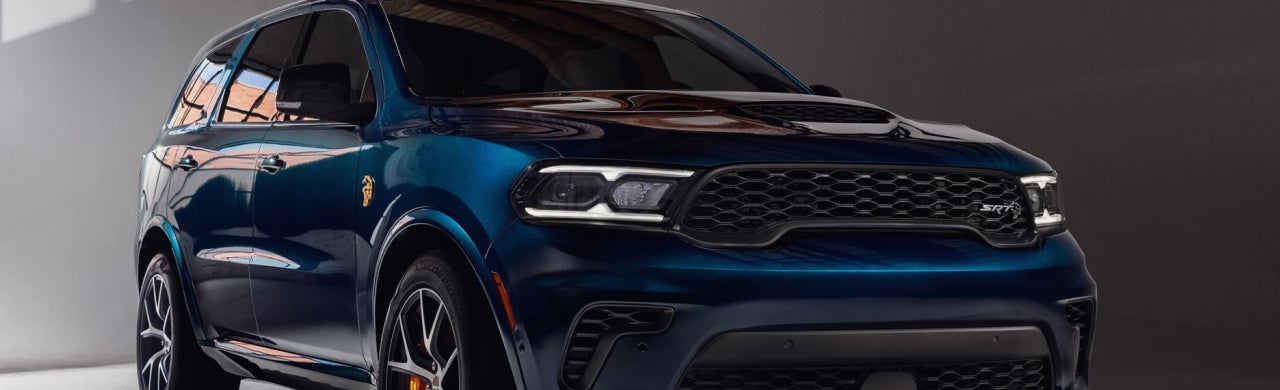
2027 Dodge Durango Maintenance: Normal vs. Severe-Service Schedules in Michigan

Dodge Durango

This content was aggregated from local dealer data and insights provided by the USA Today Network Automotive Insights team using Google Gemini and the Vehicles for Sale Near Detroit – Free Press Edition marketplace writing team.

2027 Dodge Durango Maintenance: Normal vs. Severe-Service Schedules in Michigan

Understanding your 2027 Dodge Durango's maintenance needs is key to its longevity. Frequent towing, short trips, extreme temperatures, and extended idling can significantly influence when your vehicle needs an oil change and additional drivetrain maintenance. Dodge uses engine-specific maintenance schedules, not a single universal plan, so your new Dodge Durango receives the precise care it needs.

What Does Dodge Consider Severe-Service Driving for the Durango?

Dodge defines severe-service driving conditions as those that place extra demands on your vehicle, potentially requiring more frequent maintenance than a normal schedule. For the Dodge Durango, these conditions include frequent short trips, extensive trailer towing, prolonged idling or low-speed operation, driving in extremely hot or cold temperatures, or operating in dusty or off-road environments. It is important to remember that these operating conditions affect different maintenance tasks; they do not automatically require shortening every scheduled service interval.
Here is a concise comparison:
Driving ConditionMaintenance Implication
Regular highway commutingFollow the applicable engine-specific schedule
Frequent short tripsOil change notification may appear earlier
Frequent trailer towingEarlier oil service and additional axle fluid maintenance may apply
Prolonged idling or low-speed operationEngine operating hours become particularly relevant
Extremely cold temperaturesOil service timing may change
Dusty or off-road operationAdditional engine air filter inspections may be necessary

How Often Does the 2027 Dodge Durango Need an Oil Change?

The 2027 Dodge Durango features an automatic oil change indicator system that monitors engine operating conditions to determine the ideal service timing. Factors like frequent short trips, towing, and extremely hot or cold temperatures can cause this notification to appear earlier than expected. When the oil change notification appears, Dodge guidance directs owners to complete oil service within 500 miles.
Dodge utilizes engine-specific maintenance plans for the 2027 Dodge Durango. Historically, the 3.6L Pentastar V6 and 5.7L HEMI V8 engines have shared a maintenance plan. The 6.4L HEMI V8 and Supercharged 6.2L HEMI V8 engines, however, follow separate, performance-oriented maintenance guidance, which often includes shorter oil service intervals.
Reference maximum normal oil change intervals from 2026 documentation are as follows. Please confirm these intervals against your 2027 engine-specific owner's manual for definitive requirements:
EngineMaximum Normal Oil Change Interval
3.6L Pentastar V610,000 miles, 12 months, or 350 engine operating hours
5.7L HEMI V810,000 miles, 12 months, or 350 engine operating hours
6.4L HEMI V86,000 miles or 6 months
Supercharged 6.2L HEMI V86,000 miles or 6 months
Always complete oil service based on whichever applicable limit occurs first, and do not wait until the maximum mileage or time is reached if the oil change indicator illuminates sooner.

How Do Normal and Severe-Service Maintenance Requirements Differ?

The core difference between normal and severe-service maintenance for your 2027 Dodge Durango lies in the frequency and sometimes the type of inspections and replacements. While a normal schedule covers routine needs, severe conditions can accelerate wear on certain components. For the 3.6L Pentastar V6 and 5.7L HEMI V8 engines, a general routine maintenance schedule (based on 2026 documentation, confirm for 2027) includes:
Maintenance ItemReference Interval
Engine oil and filterOil change indicator; applicable maximum interval
Tire rotationDuring scheduled service or earlier if irregular wear develops
Cabin air filterEvery 12,000 miles
Front suspension and tie rod inspectionEvery 20,000 miles or 2 years
Brake lining and parking brake inspectionEvery 20,000 miles or 2 years
Front and rear axle fluid inspectionEvery 30,000 miles or 3 years, as equipped
Transfer case fluid replacementEvery 30,000 miles or 3 years, as equipped
Engine air filter replacementEvery 30,000 miles or 3 years
Spark plug replacement100,000 miles
Engine coolant replacement150,000 miles or 10 years
For the high-performance 6.4L HEMI V8 and Supercharged 6.2L HEMI V8 engines, maintenance plans are distinct. These engines typically have shorter oil service intervals and spark plug replacement schedules, reflecting their higher-performance design. Always consult your 2027 Dodge Durango owner's manual for the precise maintenance schedule tailored to your specific engine configuration.

Which Additional Services Does Frequent Trailer Towing Require?

Frequent trailer towing places significant stress on the drivetrain components of your Dodge Durango. Dodge's established maintenance guidance specifies changing applicable front and rear axle fluids at scheduled inspection intervals when the vehicle is used for frequent trailer towing, off-road driving, police, taxi, or fleet operation. Differential fluids are crucial for lubricating the gears and bearings within the drivetrain, especially when operating under heavy loads.
Additionally, the transfer case fluid, when equipped on your all-wheel-drive Dodge Durango, may also require more frequent attention under severe conditions. It is important to distinguish these services from automatic transmission fluid service. Consult your owner's manual for specific recommendations regarding axle fluid and transfer case fluid replacement intervals for your 2027 Dodge Durango towing maintenance needs.

How Do Michigan Winters Affect Durango Maintenance?

Michigan winters, with their cold temperatures and challenging driving conditions, can significantly impact the maintenance needs of your Dodge Durango. Repeated cold starts and short journeys, common in areas like Fort Gratiot Township, Port Huron, and throughout St. Clair County, may prevent the engine oil from consistently reaching normal operating temperatures, which can affect its lubricating properties. Extended idling, such as during traffic in Marysville or St. Clair, also accumulates engine operating time without adding equivalent mileage, potentially triggering an earlier oil change notification.
Beyond oil changes, winter conditions in Michigan's Blue Water region require attention to other critical components. Battery condition is vital for reliable cold starts. Regular brake inspections are essential, as winter driving can accelerate wear. Ensuring your cooling system has adequate protection against freezing is also key. Furthermore, the exposure of your Durango's underbody to winter road-treatment materials necessitates routine inspections to prevent corrosion. Addressing these aspects as part of your 2027 Dodge Durango maintenance schedule helps ensure your vehicle performs reliably through the colder months.

Why Service Your Dodge Durango at Moran Blue Water CDJR?

For expert 2027 Dodge Durango service in Fort Gratiot Township, MI, look no further than Moran Blue Water CDJR. Our Mopar service department is staffed by factory-trained technicians who understand your Dodge Durango's specific needs. We use genuine Mopar parts and state-of-the-art equipment to perform all necessary maintenance, from routine oil and filter changes and tire rotations to comprehensive brake inspections, battery testing, cooling system services, and intricate drivetrain maintenance. Trust us to keep your Dodge Durango running at its best by following Dodge's precise maintenance guidelines.

Frequently Asked Questions

1. What driving conditions qualify as severe use for the Dodge Durango?
Driving conditions like frequent short trips, regular trailer towing, prolonged idling, and operation in extreme temperatures or dusty environments are considered severe use for the Dodge Durango.
2. Does frequent trailer towing affect Dodge Durango differential fluid maintenance?
Yes, frequent trailer towing requires more attentive inspection and potential replacement of applicable front and rear axle fluids to ensure proper lubrication of drivetrain gears and bearings.
3. Do all 2027 Dodge Durango engines have the same oil change interval?
No, the 2027 Dodge Durango has engine-specific oil change intervals. For example, the 3.6L Pentastar V6 and 5.7L HEMI V8 have different maximum intervals compared to the 6.4L HEMI V8 and Supercharged 6.2L HEMI V8.
4. Can short winter trips cause the Durango's oil change reminder to appear earlier?
Yes, repeated cold starts and short winter can keep engine oil from reaching optimal operating temperatures, which can cause the oil change indicator to activate sooner.
5. Does stop-and-go driving require more frequent Dodge Durango maintenance?
Yes, prolonged idling and low-speed operation, common in stop-and-go traffic, accumulate engine operating hours without equivalent mileage, which can lead to earlier oil change notifications and may affect other maintenance items.
Written for Moran Bluewater CDJR
By the USA TODAY Network Automotive Insights Team, in collaboration with 
https://vehiclesforsaleneardetroit.com/ and the Vehicles for Sale Near Detroit – Free Press Edition.
Disclaimer: This article's content is intended for informational purposes only. Vehicle specifications and features are based on data provided by J.D. Power and local dealerships and may vary by individual vehicle, VIN, trim, configuration, packages, and optional equipment. Vehicle images may not depict the exact model, trim, features, packages, accessories, or specifications described. Vehicle pricing, availability, features, and specifications are subject to change without notice. Please reference the dealership's vehicle listing and window sticker or consult the dealership directly for complete and accurate details.
Posted in:

Related Posts

Jeep service technicians checking fluids

Jeep® Service Near Me: What to Expect at Our Service Center

A search for Jeep® service near me usually starts on a cold morning, when something under the hood sounds different than it did yesterday. At Moran Blue Water Chrysler Dodge Jeep RAM in Fort Gratiot, MI, that search ends with a service drive built to answer the question instead of leaving you guessing. Here is what to expect when you visit our Jeep service center. Technicians Who Work on Jeep Brand Vehicles Every Day Your repair order goes to a technician trained on the systems in your specific Jeep SUV, working with genuine Mopar® parts engineered for that application rather than a generic substitute. Tolerance matters on a transfer case service or a four-wheel-drive diagnosis, where a part that merely fits is not a part that works. Routine Work Without the Appointment Oil changes, tire rotations, battery tests, and wiper replacements run through the Mopar® Express Lane, so you can pull in without booking ahead. Every visit includes a multi-point inspection covering brakes, fluids, belts, hoses, and tire tread depth, and you hear the findings in plain language. What Michigan Do to Your Undercarriage Salt-treated roads from November through April attack brake lines, exhaust hangers, and suspension components long before you hear a symptom. Cold cuts battery cranking power, which is why the inspection flags a weak battery before the first hard freeze rather than after it. Book Your Next Service Visit at Moran Blue Water Chrysler Dodge Jeep RAM Keeping a Jeep SUV on the road through a Michigan winter is about catching problems early, not reacting to them. Our team at Moran Blue Water Chrysler Dodge Jeep RAM in Fort Gratiot, MI works on these vehicles and know what salt and cold do to them. Schedule your next appointment and get a straight answer about where your vehicle stands.

Jeep brake service

Warning Signs Your Vehicle Is Overdue for Brake Service

Brakes rarely fail without warning, but the warning usually arrives as a sound or a feeling long before a brake service light shows up on a dashboard. Technicians at Moran Blue Water Chrysler Dodge Jeep RAM see ignored symptoms every week. Learning the signals early keeps a routine pad replacement from becoming a more serious repair. Squealing Friction material on a new pad measures roughly 12 millimeters, and most shops replace pads near three millimeters, or about 75% worn. Most brake pads include a wear indicator that will make a squealing sound once the wear gets to this point. If you’re hearing a squealing sound while braking, it’s by design to let you know it’s time for a brake pad replacement. Grinding When the brake pad has completely worn away, the steel backing plate rides directly on the rotor face and scores it. Rotors normally last 50,000 to 70,000 miles in daily driving and 30,000 to 50,000 miles when you tow regularly, though metal-on-metal contact can end that life much sooner and cause serious damage. If you ever hear a grinding sound, make sure your next stop is our service center. Spongy Brake Pedal If you ever notice that your braking isn’t as responsive or your brake pedal feels spongy, it could point to a couple of issues. First, it could indicate that your brake fluid is leaking, or it could have even gotten contaminated with moisture. A spongy pedal could also indicate air in your brake lines. Regardless of the cause, a spongy brake pedal should spur you to make a service appointment. Schedule Brake Service at Moran Blue Water Chrysler Dodge Jeep RAM Catching a pad at three millimeters costs far less than replacing a scored rotor and a seized caliper. At Moran Bluewater Chrysler Dodge Jeep RAM, we’ve got certified technicians who install Mopar® parts matched to your vehicle. If repairs no longer pencil out, our finance team can explain Chrysler Dodge Jeep RAM financing on a newer vehicle.

Ram 1500

Is It Smarter to Lease or Finance a 2026 Ram 1500 in Metro Detroit?

This content was aggregated from local dealer and data and insights provided by the USA Today Network Automotive Insights team using Google Gemini and the Vehicles for Sale Near Detroit – Free Press Edition marketplace writing team. Is It Smarter to Lease or Finance a 2026 Ram 1500 in Metro Detroit? A Guide for Fort Gratiot and Metro Detroit Drivers Deciding between leasing and financing a new truck is a big choice, especially when it comes to a powerful vehicle like the 2026 Ram 1500. For drivers in Fort Gratiot, Port Huron, and across Metro Detroit, understanding the differences can save you money and match your ownership goals. At Moran Bluewater CDJR in Fort Gratiot Township, we're here to help you compare your options for the impressive 2026 Ram 1500. Why the Lease-or-Finance Decision Is Different for a Full-Size Truck Full-size trucks, like the 2026 Ram 1500, often have higher prices than many cars. This means your monthly payments, whether leasing or financing, will be a larger part of your budget. There's also strong demand for desirable truck setups, which can affect both financing rates and lease residual values. A truck's residual value is what it's expected to be worth at the end of a lease term. A higher residual value can mean lower monthly lease payments. How you plan to use your truck also matters a lot. Will you be commuting daily from Fort Gratiot to Detroit, or using it for heavy work around St. Clair County? Your mileage and how much wear and tear your truck experiences play a big role. The main financial difference comes down to whether you want to return the truck after a few years or build equity through ownership, which means the truck becomes more yours as you pay off the loan. When Leasing a Ram 1500 May Make More Sense Leasing a 2026 Ram 1500 can be a smart choice for certain drivers. If you like driving a new truck every few years, leasing lets you enjoy the latest features and technology without the long-term commitment of ownership. It often means a lower monthly payment compared to financing the same vehicle, which can be helpful if you're prioritizing your monthly budget. Leasing is also good for drivers with predictable annual mileage, as leases come with mileage limits. If you don't plan to heavily modify your new Ram 1500 with aftermarket parts, leasing avoids potential issues with returning a customized vehicle. For those who want to stay in a newer-vehicle cycle, always having a modern Ram 1500 is a key benefit of leasing. When Financing May Be the Smarter Long-Term Move Financing your 2026 Ram 1500 is often the better option if you plan to keep the truck for many years, even beyond the loan term. If your driving includes high annual mileage, perhaps for work or frequent trips across Michigan, owning means you won't face lease-end mileage penalties. Drivers who frequently use their Ram 1500 for towing and hauling, like the Big Horn Crew Cab 4X4 with its 6370 lbs towing capacity and 1730 lbs payload, benefit from ownership, as heavy use can sometimes lead to wear that might exceed lease limits. If you enjoy customizing your truck with modifications and accessories, financing gives you the freedom to do so without worrying about lease return conditions. Over time, as you pay down your loan, you build equity in the Ram 1500, which can be a valuable asset. Financing also means you avoid lease-end considerations like excess wear charges or disposition fees. How APR, Residual Value, and Insurance Change the Math When comparing leasing and financing for your 2026 Ram 1500, it's important to look at the numbers closely. For leases, you'll want to understand the money factor, which is like an interest rate. For financing, compare the available APR (Annual Percentage Rate) offers. Always ask if these are promotional rates that might change or standard rates. The projected residual value of the 2026 Ram 1500 plays a big role in lease payments; a higher residual value generally leads to lower monthly costs. Consider the down payment requirements for both options. Leasing often requires less money down than financing. Also, remember to factor in Michigan insurance premiums, which can vary based on your location (Fort Gratiot vs. Port Huron vs. Metro Detroit) and the vehicle itself. The 2026 Ram 1500 Big Horn Crew Cab 4X4 comes with safety features like Blind Spot Detection and Active Lane Management System, which might influence insurance costs. Finally, calculate the total amount you expect to pay over your planned ownership period for both options. Don't assume one is always cheaper; actual current offers from Moran Bluewater CDJR will give you the clearest picture. Ready to make a decision about a new Ram 1500? Visit Moran Bluewater CDJR in Fort Gratiot Township, near Port Huron and Metro Detroit, to discuss your options and see the 2026 Ram 1500 Big Horn Crew Cab 4X4 for yourself. Our team can help you compare current lease and financing offers to find the best fit for your lifestyle and budget. Written for Moran Bluewater CDJR By the USA TODAY Network Automotive Insights Team, in collaboration with https://vehiclesforsaleneardetroit.com/ and the Vehicles for Sale Near Detroit – Free Press Edition. Disclaimer: The content provided in this article is intended for informational purposes only. Vehicle images may not depict the exact model, trim, features, packages, accessories, or specifications described. Vehicle pricing, availability, features, and specifications are subject to change without notice. Please consult the dealership directly for complete and accurate vehicle information.